Electric Cars Dominate List of Worst First-Time MOT Failures
Electric cars are widely regarded as the simpler alternative to petrol and diesel models. With fewer moving parts and no traditional engine components, they are often assumed to be less likely to go wrong.
However as increasing numbers of EVs move beyond their initial manufacturer warranty period, a different picture is beginning to emerge.
So why are they dominating the list of worst first-time MOT failure rates?
New DVSA data reveals that five of the ten cars with the poorest first MOT pass rates in 2025 are electric vehicles. All cars must undergo their first MOT test on the third anniversary of registration, making this an important early test of real-world durability.
Most striking of all is the Mercedes-Benz EQC. Despite a list price of around £65,000, it recorded the highest first-time MOT failure rate of any model analysed. Of the 4,179 EQCs tested in 2025, 717 failed, a failure rate of 17.2%.
For many owners, that first MOT may be proving more expensive and unexpected than anticipated. A failed MOT isn’t just an inconvenience, Tyre replacements alone can cost £600, while suspension repairs can run into four figures depending on the model.
Worst First MOT Pass Rates in 2025
| Make & Model | Number of MOTs in 2025 | Number of fails | Failure Percentage |
| Mercedes-Benz EQC (Electric) | 4,179 | 717 | 17.2% |
| Ford Tourneo Custom | 3,141 | 520 | 16.6% |
| Vauxhall Insignia | 693 | 109 | 15.7% |
| Ford Tourneo Connect | 1,756 | 275 | 15.7% |
| Land Rovery Discovery Sport | 3,704 | 560 | 15.1% |
| BMW i4 (Electric) | 3,830 | 571 | 14.9% |
| Tesla Model Y (Electric) | 19,282 | 2,859 | 14.8% |
| BMW X5 | 6,250 | 922 | 14.8% |
| Tesla Model 3 (Electric) | 13,159 | 1,924 | 14.6% |
| Citroen E-C4 (Electric) | 2,680 | 379 | 14.4% |
Why are EVs So Prominent?
Electric cars now account for a growing share of new car sales, representing 20.6% of all new registrations in January this year according to the SMMT. With more high mileage and second-hand examples on the road, it is inevitable that they will feature more prominently in MOT statistics.
However, volume alone does not explain the pattern.
Tesla performs poorly in the MotorEasy Reliability Index, ranking 43rd out of 46 manufacturers. The Model 3 and Model Y also appear in the worst ten models for first-time MOT pass rates. Between them, they recorded 3,893 failures in 2025, the highest combined total for any electric models on the list.
Premium branding clearly does not guarantee a clean MOT sheet.
If EVs Have Fewer Moving Parts, What’s Going Wrong?
Tyres: The Weight and Torque Factor
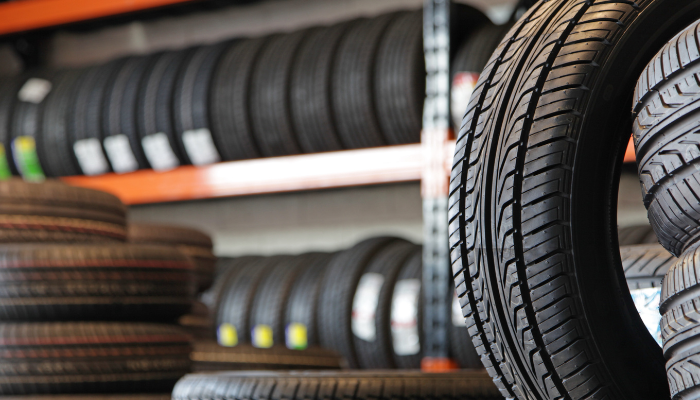
A 2023 report by the Institute of the Motor Industry found that EVs are 40% more likely to fail an MOT due to tyre-related issues compared with petrol cars.
Battery packs significantly increase vehicle weight, while instant torque delivery accelerates tyre wear. The result is faster degradation, particularly in urban stop-start driving.
Brakes: An Unintended Consequence of Regeneration
A 2021 government report found that EVs fail more often on safety-critical items compared to their petrol equivalents.
One contributing factor is regenerative braking. Because EVs rely heavily on regenerative systems to slow a vehicle down, their conventional friction brakes are used less frequently. While this improves efficiency and reduces braking under normal driving conditions, reduced mechanical use can allow moisture and road salt to build up on brake discs, increasing corrosion over time.
Suspension: Carrying Extra Weight
EV battery systems add considerable mass, placing sustained strain on suspension components and potentially contributing to premature wear.
High-Voltage Systems: A New Category of Failure
Unlike petrol and diesel cars, EVs introduce high-voltage systems that can generate their own MOT failure points. These faults may be linked to insulation degradation, environmental exposure or maintenance issues.
The First MOT as a Milestone
The first MOT test is more than just a legal requirement. It is often the first independent inspection a car undergoes outside of the dealership network, and it can highlight how a vehicle has coped with three years of real-world driving.
For many EV owners, this timing also coincides with the end of the standard three-year manufacturer warranty period.
That does not mean problems are inevitable. However, it does make the three-year mark a sensible point to reassess your vehicle’s condition, servicing history and future plans.
Electric vehicles may not require oil changes, but they still rely on braking systems, suspension components and increasingly complex electronics, all of which benefit from regular oversight.
Looking Beyond the Initial Warranty Period
As your EV approaches its third birthday, it may be worth reviewing what is and is not covered once the original warranty period ends, especially if you plan to keep the car for the longer term.
At this stage many drivers choose to look at servicing plans or extended warranty options. This is not because problems are inevitable, but because understanding potential costs in advance can make ownership more predictable and easier to budget for.
A MotorEasy Electric Vehicle Warranty not only covers you for sudden mechanical and electrical failures, with vehicle recovery costs included if your claim is valid.
What This Means for Drivers
The idea that electric cars are maintenance-free is increasingly proving to be a myth.
While they do not require oil changes, EVs still need regular car servicing to remain roadworthy and to avoid MOT surprises. Typical EV servicing includes battery health checks, brake inspections, charging system maintenance, cooling system checks and drivetrain inspections.
MotorEasy Servicing can save you up to 40% on manufacturer servicing costs and, if you choose to upgrade to a full manufacturer-level service, includes a free MOT as standard.